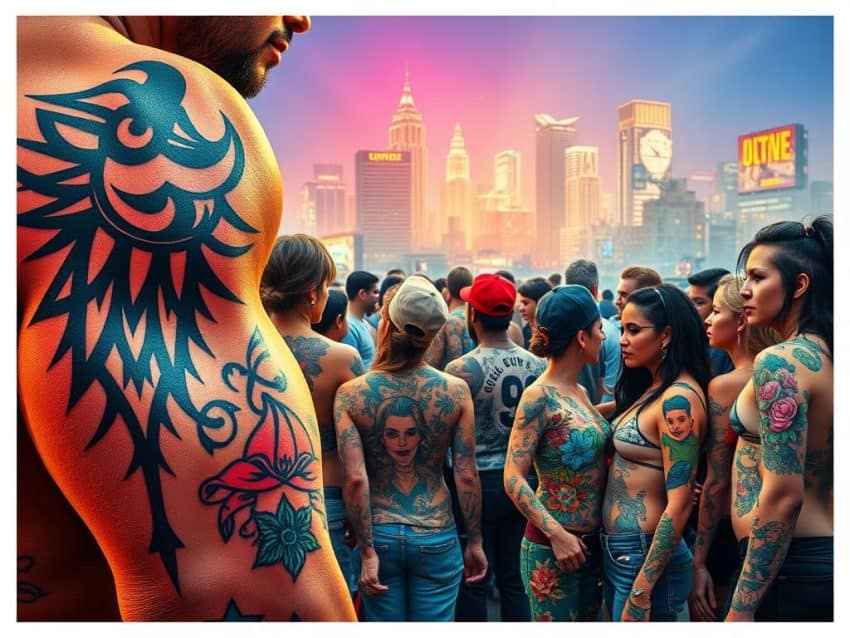
The 1980s and 1990s were full of rebellion and creativity. Tattoos became more than just marks; they showed who we were. Tattoos in the 1980s and 1990s made self-expression a big part of our culture. Getting a tattoo was once a secret thing for sailors and outlaws.
But, in 1997, New York City ended its 40-year ban on tattoos. This change made tattoos more popular than ever before.
In those years, tattoos were all about rebellion. They were influenced by punk culture of the 80s. 80s tattoos started a big change. Celebrities like Pamela Anderson and Johnny Depp showed off their tattoos, making them cool.
By the end of the 90s, 20% of Americans had tattoos. This showed how tattoos had become a big part of our culture.
New styles and designs emerged during this time. From Celtic knots to cartoon tattoos, each one told a story. Tattoos became a way to express ourselves, shaping today’s body art trends.
Key Takeaways
- Tattoos transitioned from outlaw status to a celebrated form of self-expression.
- The 1980s saw a significant increase in tattoo shops, reflecting growing cultural acceptance.
- High-profile celebrities in the 1990s played a key role in making tattoos popular.
- New tattoo styles defined the era’s art scene.
- By the end of the 1990s, about 20% of Americans had at least one tattoo.
- The lifting of New York City’s tattoo ban in 1997 was a big cultural shift.
Tattoos in the 1980s and 1990s
The 1980s were a big change for tattoos, making them more accepted. This decade saw a rise in rebellion tattoos, showing bold attitudes and cultural shifts. Punk culture made tattoos a powerful way to express oneself.
The Rise of Rebellion in the 1980s
Tattoos in this time were more than just decorations; they were a sign of identity. Punk rock brought dramatic designs, challenging social norms. 80s tattoos became popular with their detailed patterns and bright colors, inspired by music and art.
As society’s views changed, tattoos became fashionable statements, not just signs of deviance.
Celtic Knot and Other Popular Designs of the 80s
Celtic knot tattoos were a hit, with their bold lines and shapes. Artists mixed traditional and modern styles. Other popular tattoos in the 80s showed influences from pop culture and personal symbols, showing the variety of expressions.
Celebrity Influence on Tattoo Trends
The 1990s were a big change for tattoos, thanks to celebrities. Stars like Pamela Anderson made tattoos cool, not just for rebels. The media showed how tattoos were fashionable and a way to express oneself.
The Celebrity Endorsement Phenomenon in the 1990s
Celebrity tattoos had a big impact on culture. Pamela Anderson’s barbed-wire tattoo was a hit. It showed tattoos were becoming mainstream.
In 1996, more women than ever were getting tattoos. Celebrities inspired fans to get inked, leading to more tattoos.
The Impact of Music and Media
In the 1990s, music and tattoos went hand in hand. Rock and hip-hop stars like Tupac Shakur were tattoo icons. Their tattoos showed tattoos were part of *90s music and tattoos*.
Music videos and magazines made tattoos cool. Stars like Justin Timberlake and Mariah Carey started new tattoo trends. This mix of music, media, and tattoos is remembered today.
Conclusion
The 1980s and 1990s were key in changing how people see tattoos. Tattoos moved from being a sign of rebellion to a way to express oneself. This time saw new styles like new school and biomechanical tattoos. Celebrities also played a big role in making tattoos more accepted.
Today, 36% of employers say tattoos don’t affect hiring. And 32% think they might even help. This shows how tattoos have become more accepted in society.
Looking back, tattoos have changed a lot. They went from being a symbol of rebellion to a mainstream choice. This change shows how society’s values have shifted. Instagram has made it easier for people to see different tattoo styles and artists.
As tattoos evolve, we see new styles like minimalistic and watercolor tattoos. Tattoo removal has also improved. This makes it easier for people to try out tattoos and express themselves.
Tattoos are more than just looks; they tell our stories and show who we are. As tattoos continue to change, it’s exciting to think about what the future holds. How will future generations change tattoo culture even more?
