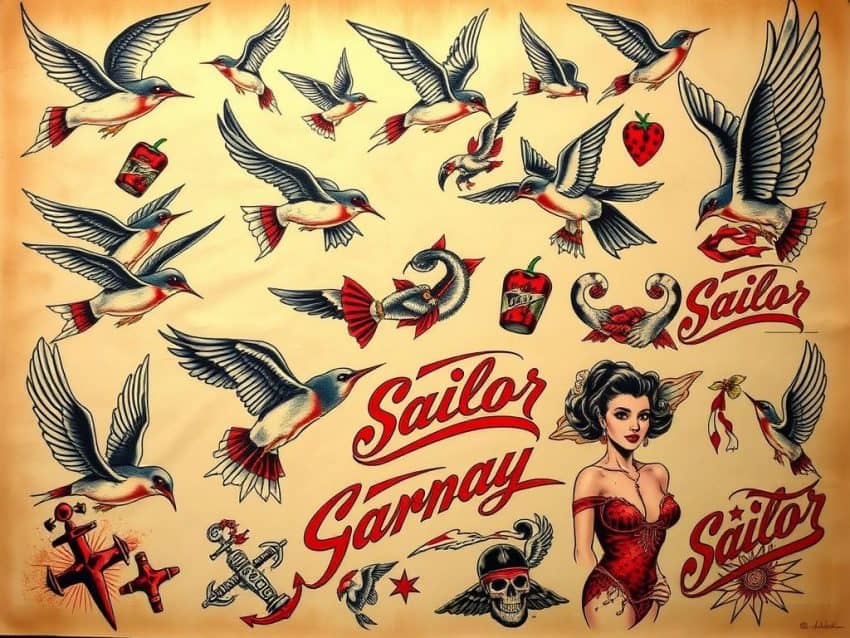
Thinking about body art culture and its growth, I see tattoos as a deep link between personal expression and history. Tattoos are more than just ink; they tell stories, hold memories, and show a desire for freedom. Sailor Jerry, or Norman Keith Collins, is a key figure in tattoo history.
His bold spirit and new tattoo methods changed the ink we use today. He started a tattoo revolution that many of us connect with. His art didn’t just make tattoos; it shaped a culture, mixing Eastern and Western styles into something beautiful.
Let’s dive into Sailor Jerry’s life and how his unique style has changed our skin’s canvas.
Key Takeaways
- Sailor Jerry, born in Reno in 1911, ventured across the U.S., impacting tattoo artistry.
- His shop in Hawaii, featuring only two tattoo stations, became a haven for servicemen.
- He was a trailblazer in combining Japanese and American tattoo techniques.
- The introduction of purple ink revolutionized the traditional tattoo palette.
- Sailor Jerry emphasized hygiene and sterilization, setting new standards in tattooing.
- His legacy continues to flourish, evident through modern tattoos and festivals celebrating his influence.
The Life and Legacy of Sailor Jerry
I find Sailor Jerry’s life story captivating. Born Norman Keith Collins in Reno, Nevada, he had an adventurous spirit. This spirit led him to become a renowned tattoo artist.
He grew up in northern California in the early 20th century. The excitement of different lifestyles and experiences drew him in. He started traveling by hopping trains, where he discovered his love for tattooing.
Beginnings of Norman Keith Collins
In the late 1920s, Collins started tattooing in Chicago. Tatts Thomas taught him the basics. This time was full of fascination and growth for him.
At 19, he joined the U.S. Navy. This experience shaped his identity and tattoo style. His travels influenced his work.
Transition to Tattooing
During his Navy time in Southeast Asia, Collins learned many cultural styles. These styles shaped his unique tattoo art.
After Pearl Harbor, he settled in Hawaii and opened a tattoo parlor in 1942. It mainly served military personnel. Their tattoos became symbols of identity and strength.
Collins’ designs, from hula girls to nautical stars, resonated with the soldiers. This solidified his place in the tattoo world. His work and dedication helped create the Old School tattoo style, inspiring artists globally.
The Influence of Sailor Jerry
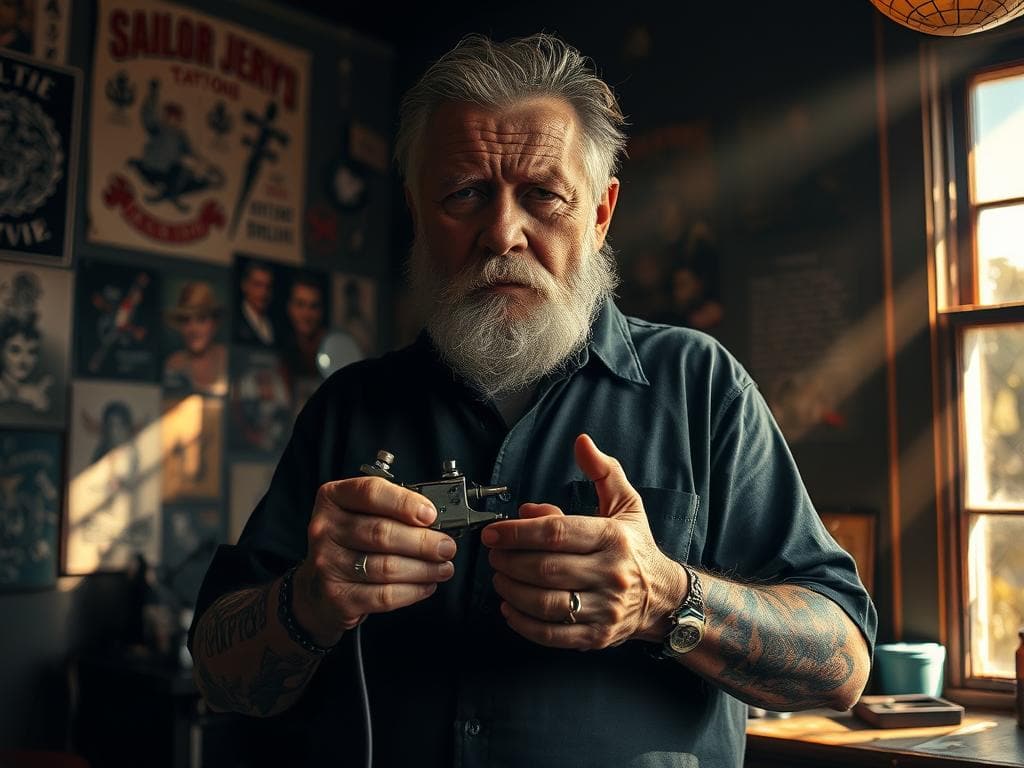
Sailor Jerry was a big name in tattoos, known for his bold designs and bright colors. He changed how tattoos were made on skin with his new techniques. His focus on quality and art inspired many tattoo artists after him.
The tattoo machines of his time got better, allowing for more detailed and lasting tattoos. This made tattoos a recognized art form.
Innovations in Tattoo Techniques
Sailor Jerry created the Mag shader, which greatly improved shading in tattoos. This tool helped make tattoos look smoother and more detailed. His work set a high standard in the tattoo world.
He also played with colors and ink, making the first purple tattoo ink. This was a big deal back then, as many artists were limited by what they could use.
Incorporation of Cultural Styles
Sailor Jerry studied traditional Japanese tattooing, adding a new level of art to American tattoos. His tattoos often had big, detailed designs inspired by Japan, like dragons and cherry blossoms. This mix of styles made his work stand out.
His work paved the way for a tattoo industry that values diversity and creativity. Sailor Jerry’s legacy is all about pushing boundaries and exploring new ideas.
Conclusion
Sailor Jerry’s journey shows how tattoos have grown beyond just body art. His work, as Norman Keith Collins, changed how people see tattoos. He brought Japanese styles and cleanliness, making tattoos respected art.
For over 50 years, Sailor Jerry taught tattoo artists about safety and creativity. His use of single-use needles and bright inks set new standards. His influence keeps inspiring tattoo artists around the world.
Sailor Jerry’s impact on tattoo art is huge. His style is loved and used in many ways, from tattoos to merchandise. His legacy keeps growing, honoring the art of tattoos he loved so much.
