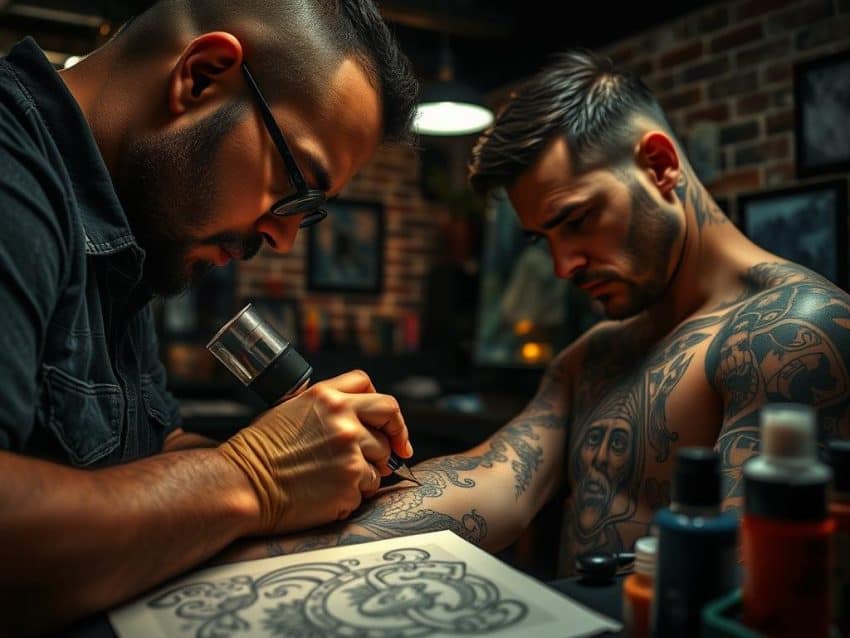
Looking in the mirror, I see the stories my tattoos tell. Each one marks a chapter in my life. It shows how tattoos connect with my identity. From Ötzi the Iceman’s tattoos around 3300 BC, tattoos have been part of human culture.
In ancient times, tattoos were more than just art. They were symbols of protection and strength. In ancient Egypt, tattoos were seen as healing. In Polynesia, they marked the transition to adulthood, showing social status and community ties.
Today, about 30% of adults in the U.S. have tattoos. Studies show 70% of tattooed people see their tattoos as a big part of who they are. Tattoos celebrate life’s big moments and show resilience and healing.
Key Takeaways
- The earliest evidence of tattoos dates back to around 3300 BC, linked to Ötzi the Iceman.
- In ancient Egypt, tattoos were believed to confer protection and healing powers.
- Approximately 30% of adults in the U.S. have at least one tattoo.
- Research indicates that 70% of tattooed individuals report deep personal significance attached to their tattoos.
- Tattoos often symbolize self-expression, with 47% citing it as their primary motivation for getting inked.
An Overview of Tattoos Throughout History
Tattoos have a rich history spanning about 5,000 years. They offer a glimpse into human culture and identity. Tattoos have been used for personal expression and to show collective heritage.
Historical Context of Tattoos
The oldest tattoos were found on Ötzi the Iceman, dating back to 3300 B.C.E. His body had 61 tattoos, showing the importance of tattoos in ancient times. The Chinchorro civilization in South America also had early tattoos, around 2300 B.C.E.
In Ancient Egypt, tattoos were mainly for women in religious roles. Amunet, a priestess from 2160-1994 B.C.E, is a notable example. These examples show how tattoos were tied to cultural identity.
Cultural Significance in Different Civilizations
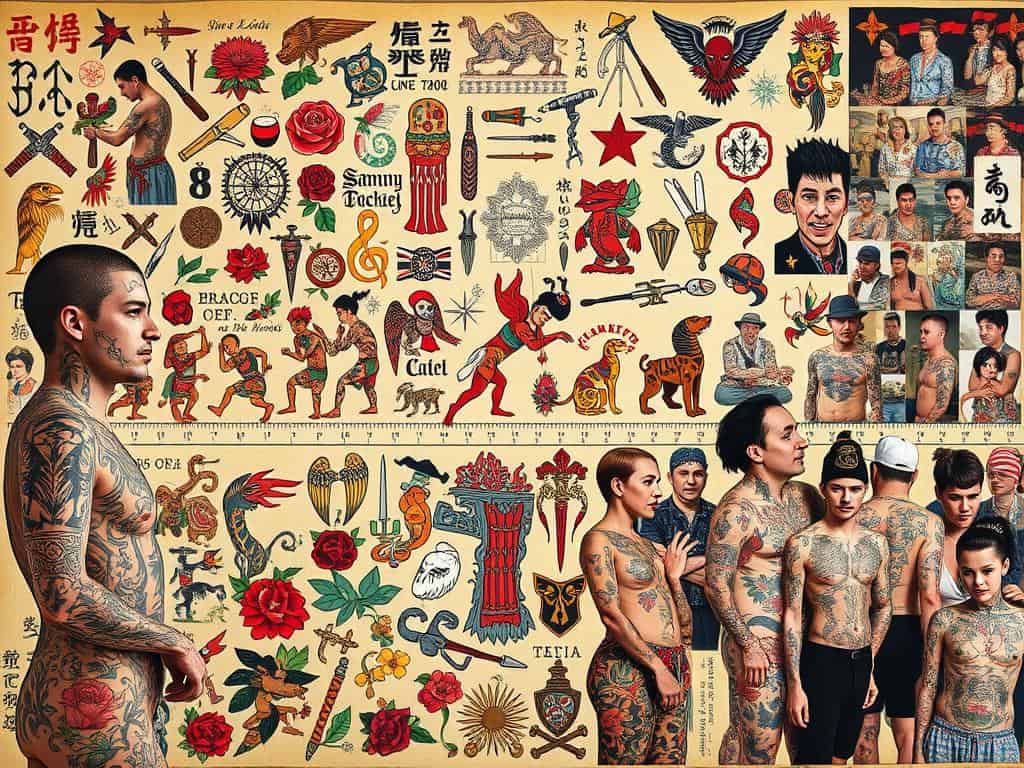
Tattoos have meant different things in different cultures. In Polynesia, tattoos showed social status and personal traits for over 2,000 years. In Samoa, the pe’a tattoo marked manhood and was a rite of passage for chiefs.
The Maori of New Zealand had moko tattoos that showed lineage and social standing. Tattoos have been important for identity and societal roles in many cultures.
The Psychology of Tattooing
The psychology of tattoos explores the emotional and mental reasons people get tattoos. For many, tattoos are a way to express themselves. They tell personal stories, mark important experiences, or show deep beliefs. This shows the art and the complex emotions and identity involved in getting a tattoo.
Self-Expression and Identity
Tattoos let people show who they are through art. They can share moments of joy, loss, love, or big changes. About 25% of people get tattoos for personal reasons, seeing them as a powerful symbol in their life story.
Many see their tattoos as a reflection of their values, experiences, and dreams. This makes their unique identity visible to others.
Tattoo Motivations
Looking into why people get tattoos offers deep insights. A 2015 poll showed 29% of Americans have at least one tattoo. People get tattoos for many reasons, like beauty or to remember important times.
Some say tattoos help them take back control after tough times. This shows how tattoos connect deeply with personal history and the psychology of tattoos.
The Connection to Mental Health
Studies have found a link between tattoos and mental health. Tattoos can be therapeutic, helping people face and share their inner struggles. This part of mental health tattoos helps with healing and building strength, like for those with anxiety or depression.
The act of getting a tattoo marks a personal journey. It shows ownership over life’s ups and downs.
Conclusion
The tradition of tattooing is a rich tapestry of history, culture, and psychology. Tattoos have been more than just body art; they carry deep meanings and roles in society. They tell personal stories, tied to identity, emotional health, and resilience.
These markings convey messages about love, loss, and growth. It’s amazing how they can share such deep stories.
Studies show tattoos can boost self-esteem and help people cope with trauma or big life changes. Memorial tattoos, for example, are seen as therapeutic ways to honor loved ones. The bond between tattoo artist and client builds trust and emotional release, making the tattooing process healing and meditative.
The tattoo culture is evolving, with more people embracing tattoos as a way to express themselves. Tattoos have moved from being stigmatized to being cherished for their stories and emotions. As the tattoo industry grows, understanding the long-term effects of tattoos is key to grasping our connection to body art and society.
