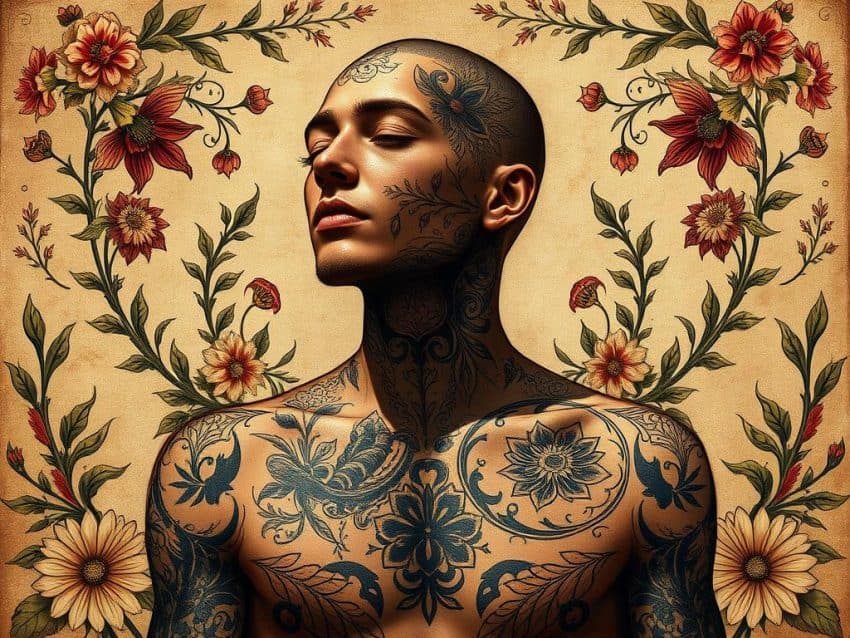
Our bodies are now canvases for self-expression. Getting my first tattoo was exhilarating. It was more than a pretty design; it was a statement of who I am and my life’s journey.
Tattooing has deep roots, spanning thousands of years and crossing cultures. It’s not just about rebellion; it’s a mix of art and personal stories. Exploring how tattooing has shaped fine art shows its lasting impact on our view of body art.
Key Takeaways
- Tattooing is an ancient art form with roots tracing back to various civilizations, including Egypt and Rome.
- The cultural significance of tattoos varies widely, with unique meanings in the Maori and Japanese traditions.
- The transition of tattoos from symbols of rebellion to mainstream acceptance highlights significant societal shifts.
- Contemporary tattoo artists are increasingly being recognized within fine art spaces, bridging the gap between tattoo culture and the art world.
- Social media has played a key role in changing how we see tattoo art, leading to wider acceptance and appreciation.
The Evolution of Tattooing as a Fine Art
Tattooing has a long and complex history. The oldest signs of tattoos come from Ötzi the Iceman, who had over 60 tattoos. This shows tattoos have always been a big part of human culture.
Looking into the cultural significance of tattoos, we see how they’ve been used in many ways. Different societies have used tattoos for personal and group reasons.
Historical Roots of Tattooing
Many cultures have used tattoos for various reasons. In ancient Egypt, tattoos were for religious and status symbols. The Greeks saw tattoos as signs of slavery or military rank.
Each time period shows how tattoos have been a big part of human history. They are more than just body art.
Cultural Significance Across Civilizations
In many cultures, tattoos hold deep meaning. In Polynesian societies, tattoos mark important life events and connect people to their heritage. Native American tribes used tattoos to share personal stories and spiritual beliefs.
This shows tattoos are key in many cultures. They help express identity and community.
Transition from Rebellion to Mainstream Acceptance
In the late 20th century, tattoos started to be seen differently. They moved from being a symbol of rebellion to being widely accepted. Famous people in music, sports, and fashion helped make tattoos popular.
Now, about 20% of Americans have at least one tattoo. This change shows tattoos are now seen as a respected art form.
Tattooing and Its Influence on Art
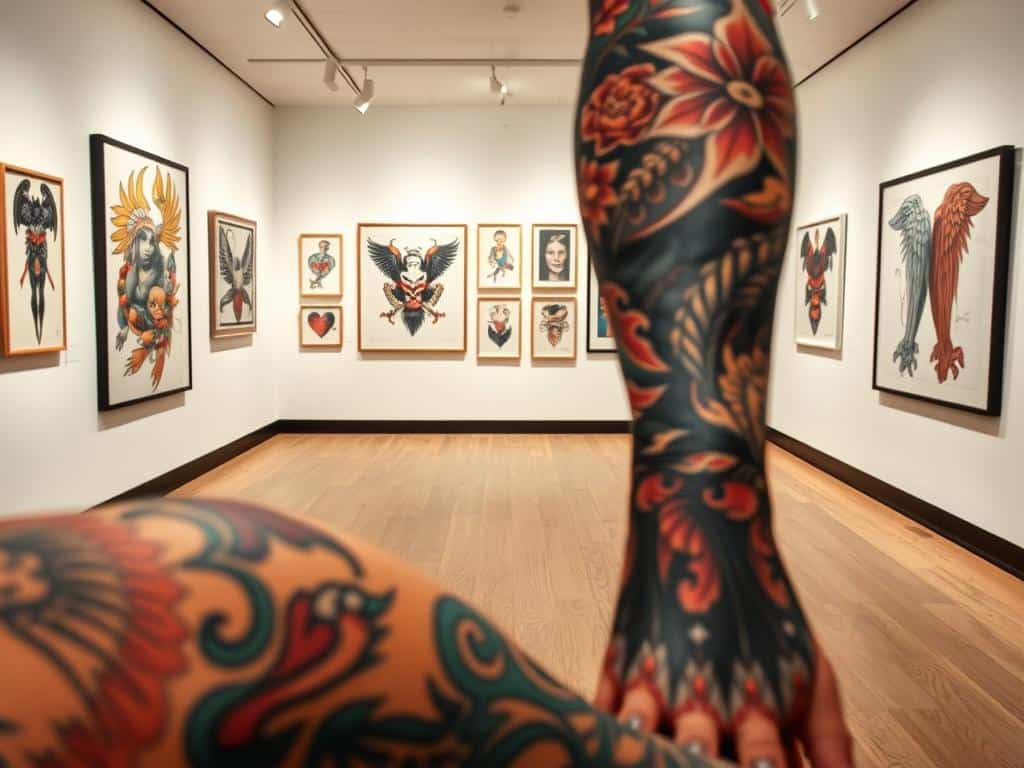
Tattooing has moved from just being body art to being recognized as a form of contemporary art. It’s now seen in galleries, showing its place among other art forms. These galleries highlight the detailed work of tattoo artists, showing the skill involved.
Recognition in the Art World
Tattoo art is getting more attention in the art world. Galleries are adding tattoo art to their collections, seeing its value and history. This change shows how tattoos are changing how we see art.
Artists like Dr. Lakra and Scott Campbell show tattoos are more than just skin art. They express deep societal themes.
Cross-Pollination of Techniques and Styles
Tattoo artists and fine artists are working together. This mix of styles and techniques is making both fields better. It’s opening up new ways to see art, making it more inclusive.
Impact of Social Media on Art Recognition
Social media has changed how we see art, thanks to tattoo artists. Sites like Instagram let artists share their work worldwide. This has brought artists together, creating a space for collaboration.
It’s also made people appreciate the stories behind tattoos more. This has connected art lovers and artists in meaningful ways.
Conclusion
Tattooing has a deep and lasting impact on fine art. It has a history that goes back to 3250 BC. This art form has become a key part of many cultures, leading to a rich exchange of ideas.
In today’s world, about 30% of Americans have tattoos. This shows how tattoos are now seen as a form of art. Tattoo artists are now recognized as skilled craftsmen, just like painters and sculptors.
The tattoo industry is booming, worth about $3 billion a year. Galleries and museums are now showing tattoo art, showing it’s valued as much as traditional art. This change is making people see tattoos in a new light.
Fashion brands and the US Army are now embracing tattoos. This shows how society’s views are changing fast. Tattoos are no longer just for a few; they’re for everyone who wants to express themselves.
Looking to the future, tattoo art will keep shaping our culture. It will give people a way to share their stories and experiences through art. Tattoos will continue to be a powerful form of self-expression.
