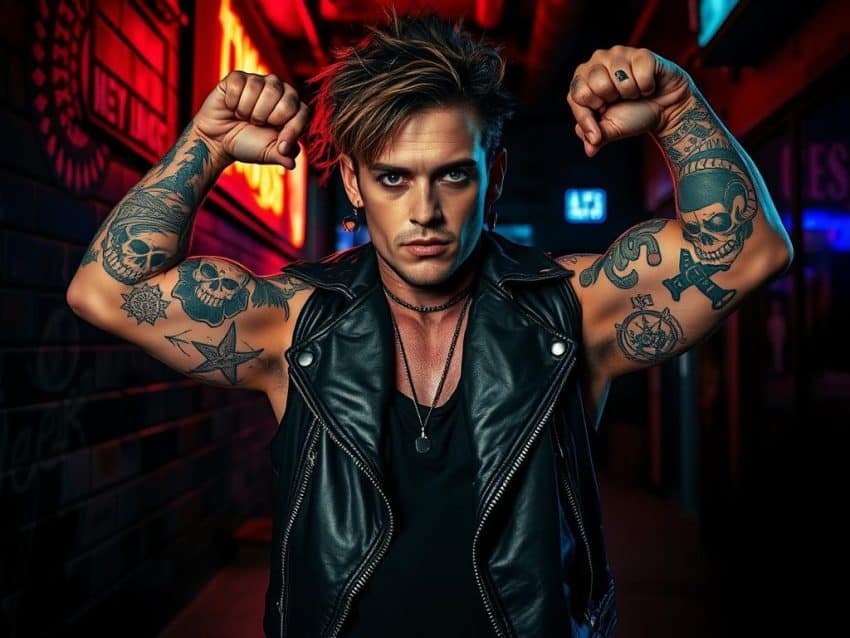
Remember walking through crowded music venues? The energy was electric, with punk rock music filling the air. It was there that punk rock tattoos caught my eye. These tattoos were bold, telling stories of rebellion.
For many, tattoos became more than just body art. They became symbols of who we were, showing our defiance against the norm. The influence of punk rock on tattoos was huge. Each rebellious ink piece showed our desire to stand out and share our true selves.
This article explores the tattoo history tied to punk. It shows how tattoos became a way for us to express ourselves and challenge the status quo.
Key Takeaways
- Punk rock and tattoos have historically shared a deep connection, both representing rebellion.
- The emergence of punk culture in the late 1970s fueled the rise of tattoo popularity among subcultures.
- Punk tattoos often use symbols like the anarchy sign, highlighting individualism and nonconformity.
- Sid Vicious and other punk icons popularized tattoos as a key part of punk identity.
- As punk rock evolved, so did tattoo meanings, from mere body art to powerful expressions of personal identity.
The Influence of Punk Rock on Tattoos
Punk rock has changed tattoo culture a lot. It mixed music and body art in a special way. This happened in the late 1970s, when punk rock started. It was all about rebelling against the usual ways of life.
This movement changed tattoos too. Tattoos became a sign of standing up for oneself and being different. Punk rock tattoos showed personal and political views. They also brought many styles and meanings to tattoos.
Origins of Punk Rock and Tattoo Culture
Punk rock and tattoos both wanted to rebel against the norm. When punk rock came along, tattoos became a way to express oneself. People started using tattoos to show their dislike for society’s rules.
Sid Vicious was a big example of this. His tattoos showed his punk identity. They were symbols of fighting against the system.
Punk Music: A Catalyst for Tattoo Popularity
Punk music made tattoos more popular. Bands wore tattoos to show their beliefs. They played in places where tattoos were common.
This mix of punk music and tattoos led to bold designs. Tattoos became a way to show one’s punk spirit. They were seen as a sign of rebellion and individuality.
Tattoos as Symbols of Rebellion and Identity
Tattoos are key symbols of rebellion and identity in punk. They let people show they don’t follow the crowd. Punk rock tattoos tell stories of fighting against society.
These tattoos are bold and meaningful. They show a person’s true self and reject being like everyone else. Today, these tattoos are important in many subcultures.
Punk Fashion and the Tattoo Aesthetic
Punk fashion and tattoos show the power of being different and standing up for what you believe in. This mix is all about expressing yourself freely. It started in the mid-1970s with a bold look that included ripped clothes, leather, and safety pins. This style is just like the bold tattoos seen in punk rock.
The DIY Ethos in Punk Culture
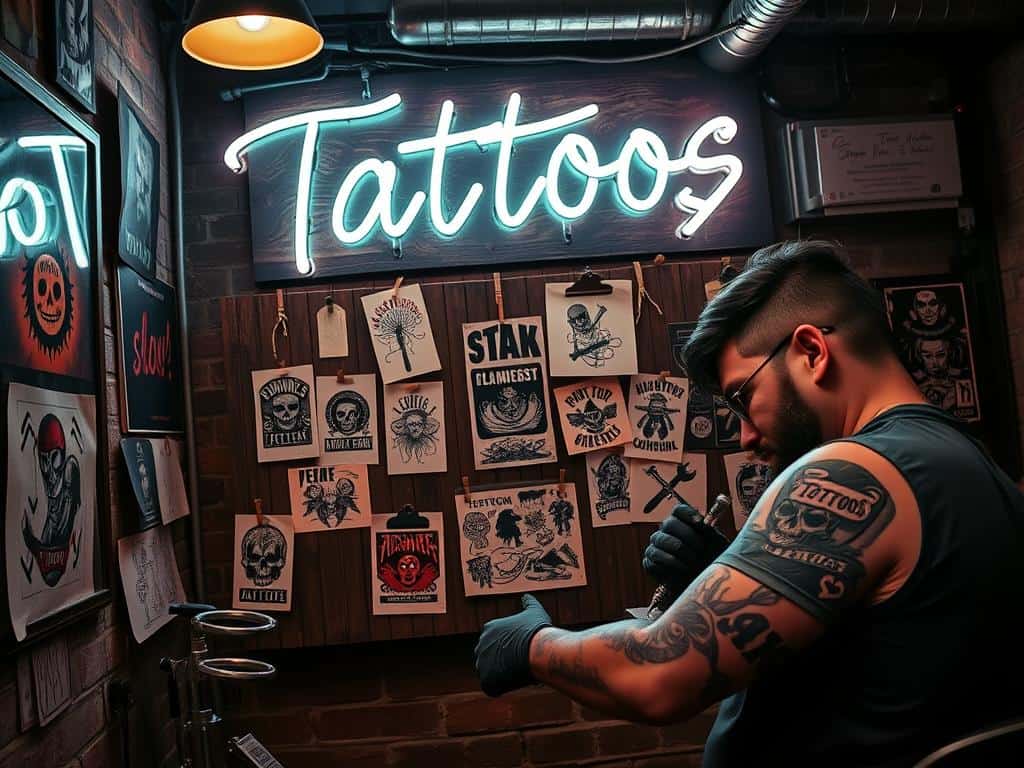
Punk culture is all about doing things yourself. People used to make their clothes from old shops, turning them into something new. This DIY spirit is also seen in tattoos. Many tattoos are made together, showing a deep bond between the artist and the person getting the tattoo.
This way of making tattoos shows that punk values being in control and defining yourself. It’s about being free and not following the usual paths.
Tattoos as Integral to Punk Fashion
Tattoos are a big part of punk fashion, showing who you are and what you stand for. People in the punk scene get tattoos that show their views and where they belong. The bold images in these tattoos match the punk style perfectly.
As punk grew, tattoos became even more important. Now, tattoos and piercings are a key part of punk fashion. They show off your style and who you are.
Conclusion
Punk rock’s impact on tattoos is clear and has lasted for decades. It started in the mid-1970s as a bold challenge to mainstream music. This movement made tattoos a symbol of personal identity and rebellion.
Today, tattoos are seen as art and a way to express oneself. This change shows how music and body art influence each other. They grow and gain acceptance together.
Punk rock tattoos often show themes of rebellion. Symbols like skulls and anarchy signs represent punk’s core. These tattoos deeply connect with one’s identity, celebrating individuality and resistance to conformity.
Going to concerts and getting tattoos together strengthens punk’s spirit. It creates strong bonds among those who share this culture.
The link between punk rock and tattoos will keep inspiring new people. Punk’s rebellious spirit and tattooing’s artistry offer powerful ways to express oneself. They highlight the importance of being true to oneself and standing up against the norm.
Even as tattoos become more accepted, their punk roots keep their meaning alive. They remain symbols of freedom and individuality, timeless in their defiance.
