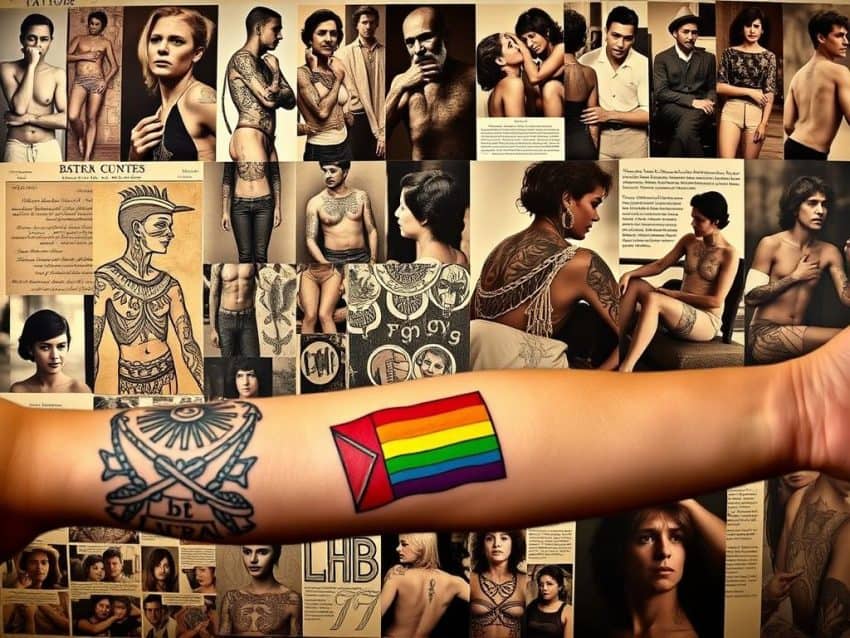
Looking at my tattoo, a rainbow with an infinity symbol, brings back many stories. Each tattoo tells a personal tale and a part of our shared history. It connects us to a community that has fought for acceptance and self-expression.
Just like us, many have marked their bodies with symbols of identity and strength. LGBTQ tattoos show our journey from hidden truths to open declarations of who we are. From the 1950s’ discreet nautical stars to today’s pride tattoos, they tell a story of struggle, empowerment, and unity.
Today, one in three Americans has a tattoo, with many in the LGBTQ community. Tattoos have changed from a sign of deviance to a symbol of culture and pride. Let’s explore how tattoos have become a powerful way to express identity, diversity, and empowerment.
Key Takeaways
- Tattoos serve as powerful personal narratives within the LGBTQ community.
- Symbols like the pink triangle and rainbow flag reflect resilience and pride in LGBTQ identities.
- Tattooing has evolved from a stigmatized practice to an accepted form of self-expression.
- Empowerment through body art allows individuals to reclaim their stories and identities.
- Inclusive tattoo studios foster safe spaces for all community members.
The Historical Significance of Tattoos in the LGBTQ Community
Tattoos have deeply influenced the LGBTQ community’s identities. Over time, tattoos have moved from being seen as deviant to symbols of pride. They have become key in forming LGBTQ identity, telling personal stories and connecting people.
From Deviance to Acceptance
At first, tattoos were seen as signs of rebellion. But when LGBTQ people started using them to show their identity, things changed. By the 1950s, many lesbians got nautical star tattoos to quietly show their identity.
As society’s views on tattoos changed, they became symbols of pride, not shame.
The Role of Tattoos in Identity Formation
Tattoos are more than just body art; they affirm identity. LGBTQ people often get tattoos to mark important moments, like coming out. Each tattoo shares a story of resilience and strength.
Many symbols, like the rainbow and pink triangle, highlight the community’s history and unity.
Key Symbols Throughout History (e.g., pink triangle, nautical star)
The pink triangle, once a Nazi symbol, now stands for LGBTQ pride. It reminds us of past struggles and inspires hope for the future. The nautical star is another symbol, used secretly by LGBTQ people to show unity.
Ink and the LGBT Community
Tattoos are very important in the LGBTQ community. They tell personal stories and show who we are. Each tattoo is like a chapter in a book, filled with courage and change.
Tattoos as Personal Narratives
Tattoos remind us of our journey to self-discovery. Many get tattoos that show their coming out stories. These designs celebrate who they are and their struggles and triumphs.
Empowerment Through Body Art
Tattoos are more than just art; they give us power. Looking at my tattoos, I feel strong and in control. Choosing them is a way to mark my growth and tell my story.
Celebrating Milestones: Coming Out and Transitioning
Tattoos help us remember important moments in our lives. They can mark big changes like coming out or transitioning. Each tattoo is a symbol of pride and belonging in the LGBTQ community.
Modern Trends in LGBTQ Tattoos
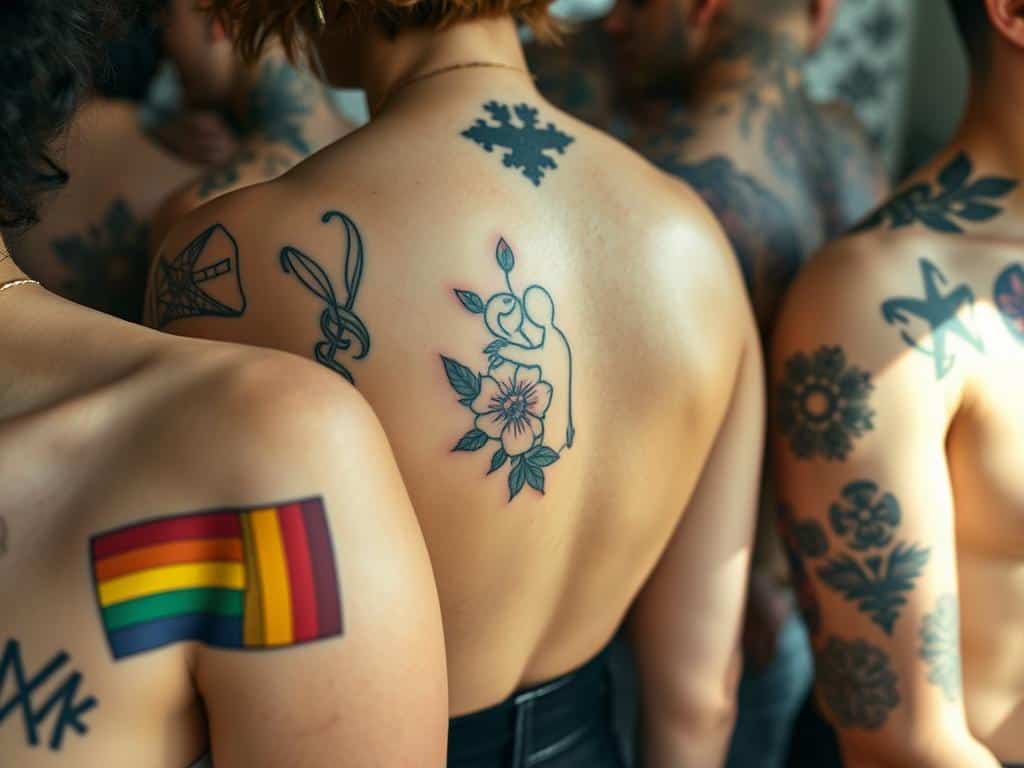
The world of tattoos has changed a lot in recent years. Modern LGBTQ tattoo trends are leading the way. One big change is the rise of queer-owned tattoo studios.
These studios are all about creativity and inclusivity. They offer a safe space for those who have been left out in traditional tattoo culture.
Emergence of Queer-Owned Tattoo Studios
Queer-owned tattoo studios are changing the game. They celebrate diversity and break down barriers for LGBTQ and trans individuals, including those of color. Tattoo artists in these studios really get their clients’ needs, making the tattoo experience special.
Inclusivity in Tattoo Design and Representation
Inclusivity in tattoos goes beyond just who gets them. Artists are now making sure their designs reflect the community. Many tattoos show pride, like the pink triangle, which 50% of queer people have.
Artists make sure to include all identities in their work. This way, everyone’s voice is heard through the tattoos on their skin.
The Connection Between Tattoos and Community Bonding
Tattoos are more than just art; they bring people together in the LGBTQ community. Getting a tattoo is a shared experience that builds strong bonds. It’s a way to show personal milestones and the journey of embracing diverse identities.
In queer tattoo shops, people often connect over their stories and experiences. This community aspect is strong and supportive.
Conclusion
Tattoos are more than just body art. They celebrate identity, resistance, and empowerment in the LGBTQ community. The history of LGBTQ tattoos shows our journey to self-acceptance and visibility. Symbols like the upside-down pink triangle and the nautical star tell our stories.
Today, tattoos are a way to express ourselves. They unite us and share our stories. With tattoos becoming more common, their significance is clear.
Body art is not just for looks. It holds deep meaning for many. LGBTQ tattoos tell our unique stories. Places like Homebody Tattoo and Baohaus Collective support this art and foster community.
These spaces create a sense of belonging. They help us feel proud and united. Tattoos are a powerful way to express our identity and connect with others.
The Queer Ink series highlights the importance of tattoos in our culture. They symbolize pride and belonging. Tattoos weave our diverse stories together, creating a vibrant LGBTQ culture.
By celebrating tattoos, we honor our history and identity. They remind us of our strength and unity. Tattoos are a powerful way to express who we are and connect with others.
