As I sit by my window with coffee, I often dream of blending my indoor space with the outdoors. The sound of leaves and birds, along with the scent of flowers, make me want a home that feels like nature. Recently, I’ve seen a big change in how we see our homes, thanks to the pandemic.
Nature-Integrated Design Trends are all about mixing indoor and outdoor spaces. They make our homes peaceful and connect us to nature. By adding indoor plants, using earthy colors, and letting in more natural light, we can turn our homes into peaceful sanctuaries.
Key Takeaways
- Nature-Integrated Design enhances emotional well-being.
- Indoor plants contribute to healthier living environments.
- Earth-toned interiors create a calming atmosphere.
- Natural light maximizes the beauty of indoor spaces.
- The connection between indoors and outdoors fosters tranquility.
Understanding Biophilic Design
Biophilic design is all about connecting with nature in our spaces. It aims to boost our emotional health by blending indoor and outdoor elements. This approach helps us feel more connected to nature, improving our lives.
Definition and Importance
Biophilic design uses natural elements in buildings and homes. It includes lots of sunlight, plants, and water for safety and comfort. It’s key because it can reduce stress, make us happier, and even help us think better.
For instance, natural light not only brightens our surroundings but also lifts our mood. This greatly benefits our emotional health.
Psychological Benefits
Biophilic design has many mental health perks. Studies show it can lower anxiety and boost creativity. Adding green walls, plants, and water features helps us feel closer to nature.
This escape from city life is essential. As more research comes in, it’s clear biophilic design is a game-changer for our well-being. It’s something to think about for both our homes and workplaces.
Key Nature-Integrated Design Trends
Exploring nature-integrated design trends is fascinating. These trends not only make our homes look better but also improve our health and the planet. Trends like earth-toned interiors, indoor plants, and blending indoor and outdoor spaces show our love for nature.
Embracing Earth-toned Interiors
Using earth-toned colors in our homes adds warmth and peace. Nature-inspired colors like soft browns and greens create a calming feel. These colors work well with different design pieces, making our homes welcoming and peaceful.
Adding textures like Raw Jasper and Hazy Jade can make our spaces even more beautiful. It strengthens our connection to the outdoors.
Incorporating Indoor Plants
Indoor plants are becoming more popular, improving air quality and looks. Research shows some plants can remove harmful pollutants, making our homes healthier. Starting with easy-to-care-for plants is a great way to bring greenery into our homes.
Having plants indoors not only makes our homes look better but also helps our mental health. They can reduce stress and boost our mood.
Indoor-Outdoor Living
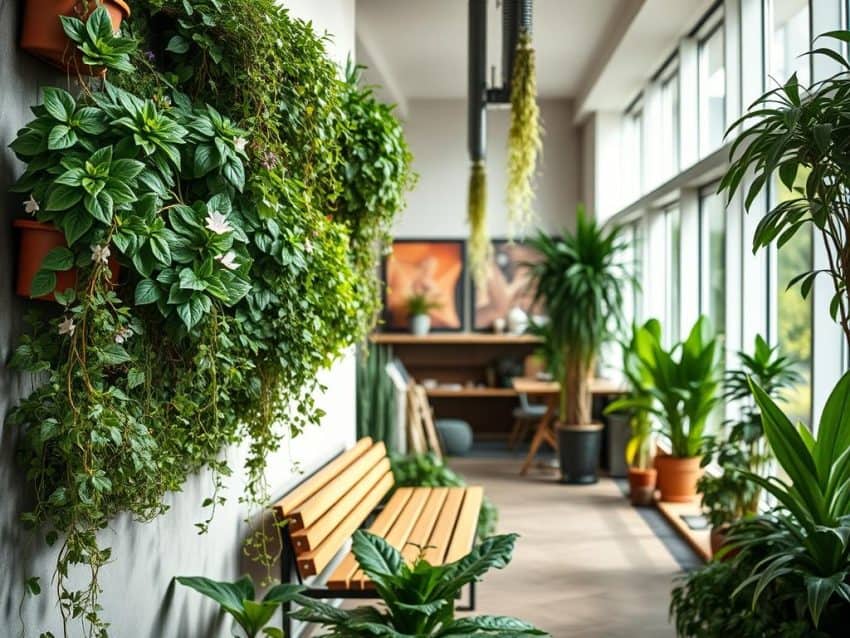
Designs that merge indoor and outdoor spaces are becoming more common. Big windows and sliding doors let nature inside, showing off its beauty. Features like vertical gardens and living walls bring the outdoors closer and clean the air.
This blend of indoor and outdoor living makes our homes more enjoyable. It highlights the value of nature in our everyday lives.
Nature-Integrated Design Trends to Bring the Outdoors Inside
Making our homes feel like nature’s retreats is a growing trend. Using natural materials boosts beauty and supports green living. These choices help us feel closer to nature, improving our well-being and peace.
Use of Natural Materials
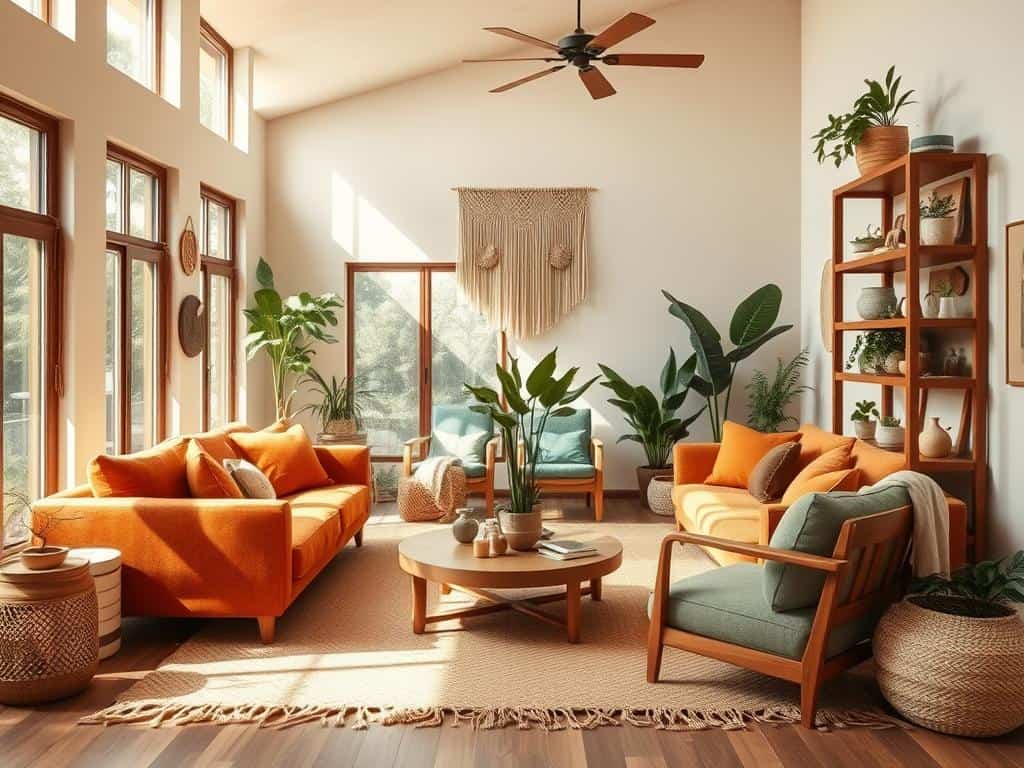
Wood, stone, and organic fabrics are becoming more popular. They add strength and a natural feel to our homes. People are choosing items that look and feel like the outdoors, making our spaces welcoming and connected.
Maximizing Natural Light
Bringing in more natural light is key in biophilic design. Big windows, glass panels, and skylights let sunlight in, boosting mood and energy. Studies show natural light can make us happier, less stressed, and even cleaner air.
Conclusion
Adopting nature-integrated design trends changes my living and work spaces a lot. These trends connect me to the outdoors. They make my spaces look better and help my emotional health.
By adding indoor plants, natural materials, and organic shapes, I create spaces that boost my mood and spark creativity. This is how I make my environments better for my mental health.
Most people spend 80-90% of their time inside. So, it’s key to improve air quality and reduce stress. Studies show that nature-filled spaces can greatly improve our thinking and mood.
Using natural light and living walls also boosts productivity and creates a calm atmosphere. This is true for both my home and office.
Biophilic design is growing, and it’s essential for a better life and a sustainable future. By turning my spaces into natural sanctuaries, I show my love for nature. This brings balance to my indoor world.
