Looking around, I feel a deep sense of responsibility. Our oceans get 8 million tons of plastic dumped into them every year. This shows that our design choices are not just about looks; they affect our planet’s future.
There’s a big change happening in Sustainable Materials in Design. We’re moving towards eco-friendly options that care for our environment. This shift aims for a future where we live in harmony with nature.
Climate change is making us rethink our materials. Designers are now using bio-based alternatives instead of traditional ones. For example, materials made from seaweed, like Notpla, can break down in just 4-6 weeks. This gives me hope for a sustainable home design that protects our planet.
New technologies and circular economy practices are changing how we build. They help reduce our carbon footprint and waste. At the same time, they meet the growing demand for eco-friendly choices.
This journey towards sustainability is not just a trend; it’s a deep commitment. As we approach 2025, sustainable materials will shape our products and way of life. It’s exciting to be part of this change.
Key Takeaways
- Sustainable Materials in Design are reshaping industries as we move toward 2025.
- Bio-based materials, such as those derived from seaweed or mycelium, reduce reliance on fossil fuels.
- The circular economy focuses on reducing waste through closed-loop processes.
- Innovative solutions, like smart technology integration, aim to decrease energy consumption.
- Implementing eco-friendly materials is key for better indoor air and energy efficiency.
- Modern design must focus on recycling and repairability to cut down waste.
- Circular economy initiatives are essential for tackling the massive waste problem.
Emerging Trends in Sustainable Materials in Design
The latest trends in sustainable materials are changing the game. Eco-friendly materials are now a big part of home design and packaging. They not only help the environment but also look and work great.
Shift to Eco-Friendly Materials
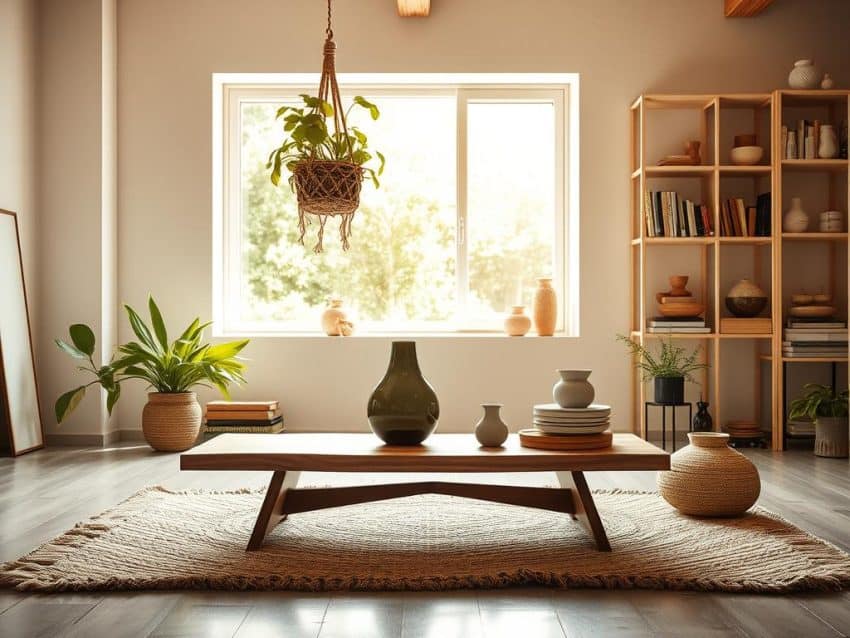
More people are choosing eco-friendly materials for homes. Builders and designers are moving away from petrochemicals to plant-based options. Materials like cork, hemp, and straw make homes more energy-efficient and healthier.
Using these materials cuts down on carbon emissions. It also makes homes better for our health.
Innovative Sustainable Packaging
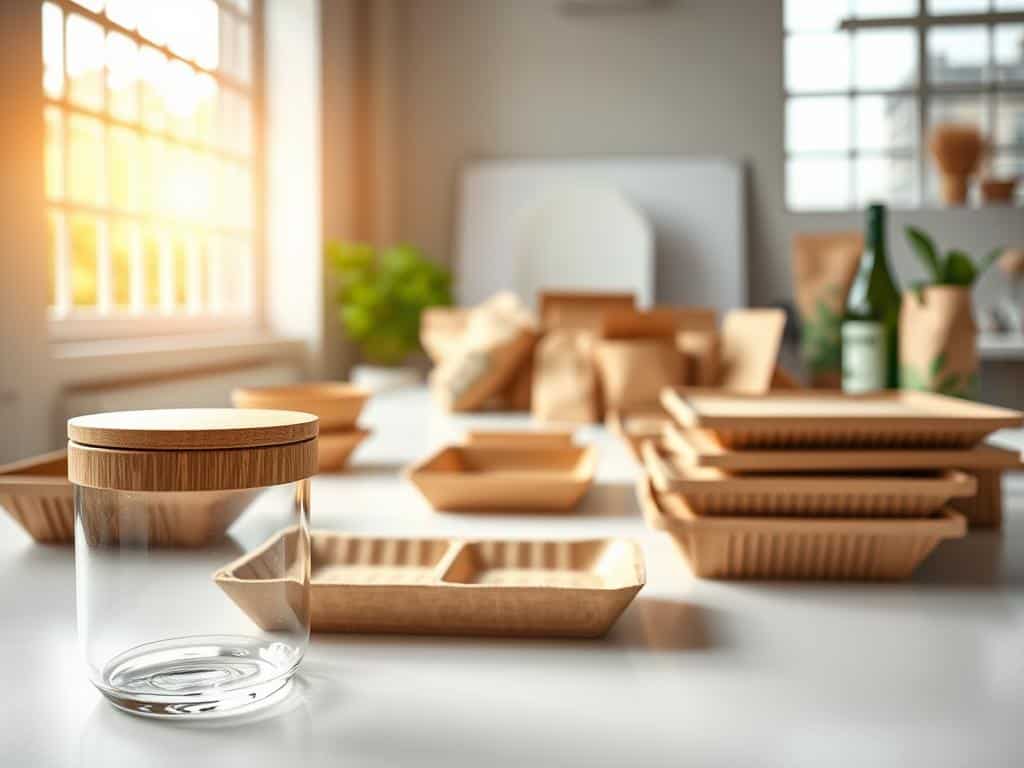
There’s a big push for sustainable packaging in product design. Consumers want products that are good for the planet. Companies are making packaging that’s reusable and made from materials that can break down.
For example, Notpla uses seaweed for packaging. It’s not only eco-friendly but also looks good and works well. This shows how important it is to use resources wisely and cut down on waste.
Key Innovations and Technologies for 2025
The future of sustainable design is set to change with new innovations and technologies by 2025. The use of smart technology is changing how we use sustainable materials. It helps manage energy better, cutting down on resource use in many areas.
Integration of Smart Technology
Smart devices, like smart lights and heaters, help save energy and make us more comfortable. They let buildings control their own energy use, fitting with green packaging and practices. This tech saves resources and shows a dedication to green buildings.
Virtual Prototyping and Design Efficiency
Virtual prototyping is really interesting in today’s design world. It lets designers test ideas without making many physical models, cutting down on waste. This method makes projects faster and supports the idea of making things that last and can be recycled.
Circular Economy Practices
Circular economy practices are key in design now. They focus on using materials again and reducing waste. Using recycled and bio-based materials is becoming more common, matching the market’s push for sustainability. I think these practices will lead to better environmental outcomes and a more eco-friendly building industry.
Conclusion
Looking at the progress in sustainable materials, we’re making big strides. We’re moving towards greener practices in many fields. This includes making homes more eco-friendly and using materials that are good for the planet.
These steps are key in fighting climate change and meeting the needs of today’s consumers. By choosing sustainable materials, we help the environment now and for the future.
Statistics show the impact of using sustainable materials. For example, recycling aluminum cans saves a lot of energy. It’s 95% more efficient than making new aluminum. This shows how recycling can greatly reduce our environmental impact.
Materials like bamboo and cork also show the way. They help us make products without harming nature. This is a big step towards a more sustainable world.
As we head into 2025, our focus on sustainable materials is a big change. People want products that are good for the planet. This shows we’re moving towards a future where we care for our planet.
While starting with sustainable materials can be tough, the benefits are worth it. It saves money in the long run and keeps our planet healthy. This is our journey towards a better future.
