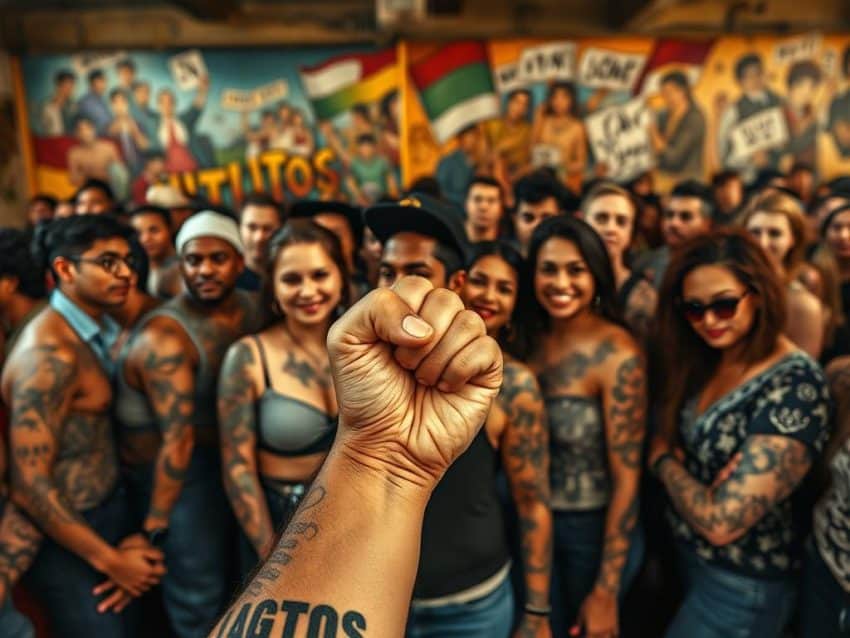
As I trace my tattoo, I think about the stories it tells. These stories are not just about looks but about fighting back, staying strong, and finding who we are. Tattoos show our personal battles and our fight against unfairness. With 21-29% of Americans sporting tattoos, it’s clear they’re more than just art; they’re a movement.
History shows tattoos have changed from symbols of the rich to signs of power for the poor. Each tattoo whispers a message of defiance against the limits society tries to impose. It turns simple ink into a beacon of courage and unity in tough times.
In this look at tattoos and class, we see how art can challenge the status quo, celebrate individuality, and spark important talks. We’ll explore how tattoos mix self-expression with social justice. This ancient tradition remains vital in today’s fights for fairness and freedom.
Key Takeaways
- Tattoos serve as powerful symbols of identity and self-expression within class struggles.
- The acceptance of tattoos in society reflects broader social change, particularlly for marginalized groups.
- Statistical data highlights a shift in perceptions towards wearing tattoos in professional settings.
- The historical context reveals how tattoos transitioned from elite practices to forms of rebellion.
- Mental health tattoos have gained popularity, representing personal narratives of resilience.
Tattoos and Class Struggles: A Historical Perspective
Tattoos have been around for thousands of years, with different meanings in various cultures. They’ve been used as protection, identity markers, and more. As I look into tattoo history, I see how tattoos have bridged social classes, showing a deep connection between tattoos and class.
The Origins of Tattooing and Class Associations
The first tattoos were found on Egyptian mummies around 2000 B.C. Tattoos have always meant something important, like identity, spirituality, and status. In ancient Rome, tattoos marked slaves, showing tattoos’ link to class.
In Japan, tattoos meant a lot, like social status for firemen and workers in the Edo period (1603-1868). The history of tattoos tells us a lot about their origins and class ties.
Evolution of Tattoos in American Society
The 1891 arrival of the electrical tattoo machine changed tattoo culture. It made tattoos more accessible. Celebrities like Marlon Brando helped change how society saw tattoos, making them personal expressions.
Today, tattoos are common, with about 30% of 18-29-year-olds having one in 2023. But, tattoos can also lead to job discrimination. The debate on tattoos, class, and culture keeps evolving, showing how society is changing.
The Role of Tattoos in Social Justice Movements
Tattoos have become a strong way for people to express their identity, in social justice movements. They show resistance and solidarity in many communities. These tattoos are not just personal; they challenge the norms of society, changing how we see body art.
Expression of Identity and Resistance
The Black Lives Matter movement shows how tattoos can show support for a cause. They help people feel connected to a larger movement. Tattoos tell personal stories and show who we are in a lasting way.
In 2012, 23% of women and 19% of men had tattoos. This shows tattoos are a key way to express identity. About 12% of people see their tattoos as part of who they are. Tattoos can be a powerful way to share our stories and histories.
Cultural Symbols and Their Impact
Cultural symbols on skin carry deep meaning in social justice movements. They stand for empowerment and fighting against oppression. Tattoos have long been symbols of female power, starting in the 1970s.
As tattoos become more accepted, their role in activism grows. People from all walks of life use tattoos to share their stories and views. This opens up important discussions about identity and social issues.
Conclusion
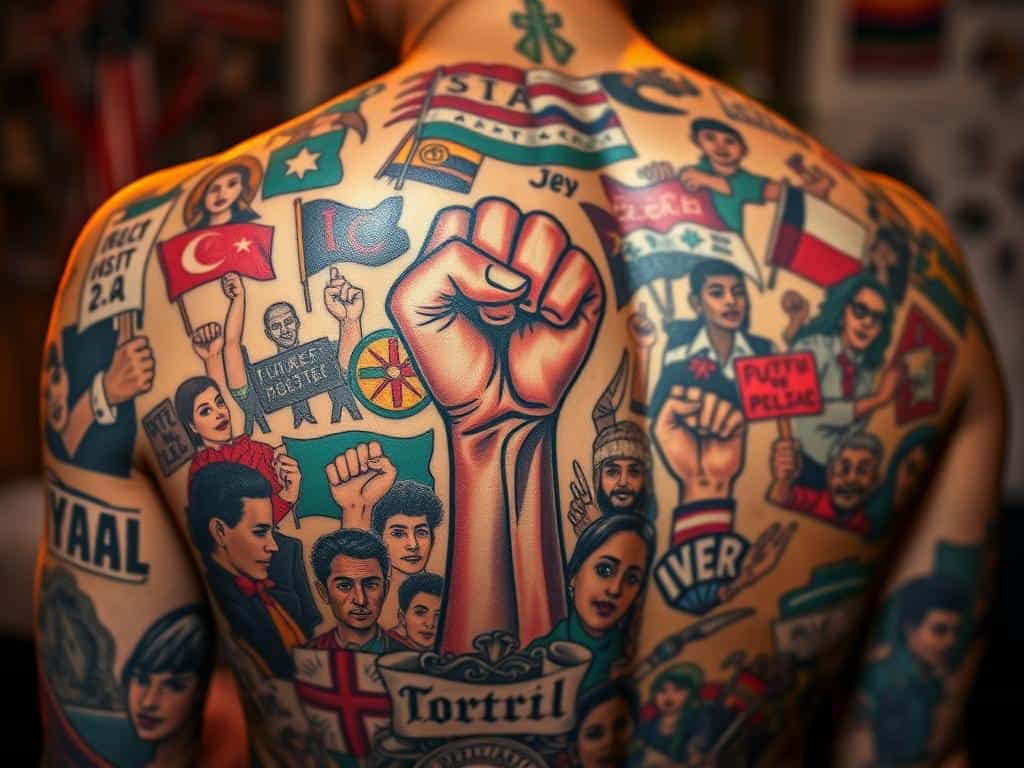
Tattoos are more than just body art; they are a powerful tool for change. They show the ongoing fight against class struggles and the stories of marginalized groups. Each tattoo is a way for people to express themselves and challenge the status quo.
Initiatives like supporting Amanda Echanis show tattoos’ connection to social justice. Artists like Alaga push for tattoos to be more inclusive. They want prices to match different incomes, making tattoos accessible to all.
The future of tattoos looks bright, with a focus on empowerment and inclusivity. Tattoos will continue to challenge old beauty standards. They will mark our skin and our society, showing the importance of body art in our culture.
