
Looking back, I feel a strong bond with the stories on my skin. Each tattoo tells a part of my life, capturing emotions and honoring ancient traditions. Tattoos are more than just ink; they are a way to express ourselves, evolving over time.
The history of tattoos is long and rich. It spans thousands of years, showing how tattoos have been used to decorate and declare. From Ötzi the Iceman’s tattoos to the rituals of indigenous cultures, tattoos hold deep meaning and beauty.
It’s amazing to see how tattoos have changed. What was once seen as taboo is now celebrated as art. They tell our personal stories, show our cultural pride, and connect us to others.
Key Takeaways
- Tattoos offer a profound reflection of our cultural identity, evolving with societal perceptions.
- Ötzi the Iceman’s tattoos mark the beginning of a journey that spans thousands of years.
- The artistry of tattooing showcases intricacy, representing personal and cultural significance.
- The introduction of modern tattoo machines has revolutionized tattoo application techniques.
- Tattoos have shifted from stigma to mainstream acceptance, showing a change in cultural trends.
- The diverse styles of tattoos highlight ongoing creativity and skill in tattoo artistry.
The Origins of Tattoos in Ancient Cultures
Tattoos have been a big part of human expression for thousands of years. They go back over 5,000 years in many ancient cultures. This practice shows the beliefs, rituals, and social structures of societies through skin designs.
Historical Tattoos: A Glimpse into the Past
Ötzi the Iceman, from around 3300 BC, had 61 tattoos. They were thought to be for healing. In ancient Egypt, tattoos started around 2000 BC. They were for women, showing status and protection during childbirth.
These tattoos give us a peek into how art and identity mixed in early societies.
Cultural Significance Across Civilizations
In many ancient cultures, tattoos meant a lot. In Polynesian cultures, they showed social standing. Chiefs and warriors had special designs.
In Greece and Rome, tattoos were for punishment or to mark slaves and criminals. This shows how tattoos reflected social norms and beliefs.
Indigenous Practices and Community Identity
Indigenous tattooing is about community and rites of passage. For the Maori in New Zealand, tā moko is a personal and historical statement. In Native American traditions, tattoos were part of communal ceremonies.
These practices show tattoos are more than decoration. They are about cultural heritage and belonging.
Tattoos and Historical Lifestyle: Evolution Through Time
The history of tattoos shows a big change in how society sees them. Tattoos went from being seen as bad to being widely accepted. This change shows how tattoos have moved through different cultures and times, becoming a real art form today.
Transition from Stigma to Mainstream Acceptance
In the mid-20th century, tattoos faced a lot of criticism in America. After World War II, they were linked to gangs and bad behavior. But, in the late 20th century, tattoos started to get more popular again, thanks to famous people and the media.
Now, tattoos are seen in many places, even in offices. This shows how society is now more open to personal expression.
Impact of Sailors and Maritime Traditions
Sailors have been key in changing tattoo culture. They brought back designs from their travels, like swallows and anchors. These designs told stories of their adventures and showed their cultural ties.
Originally, tattoos were for identification and heritage. But, they soon became a way to share life stories and cultural connections.
Modern Techniques and the Rise of Tattoo Artistry
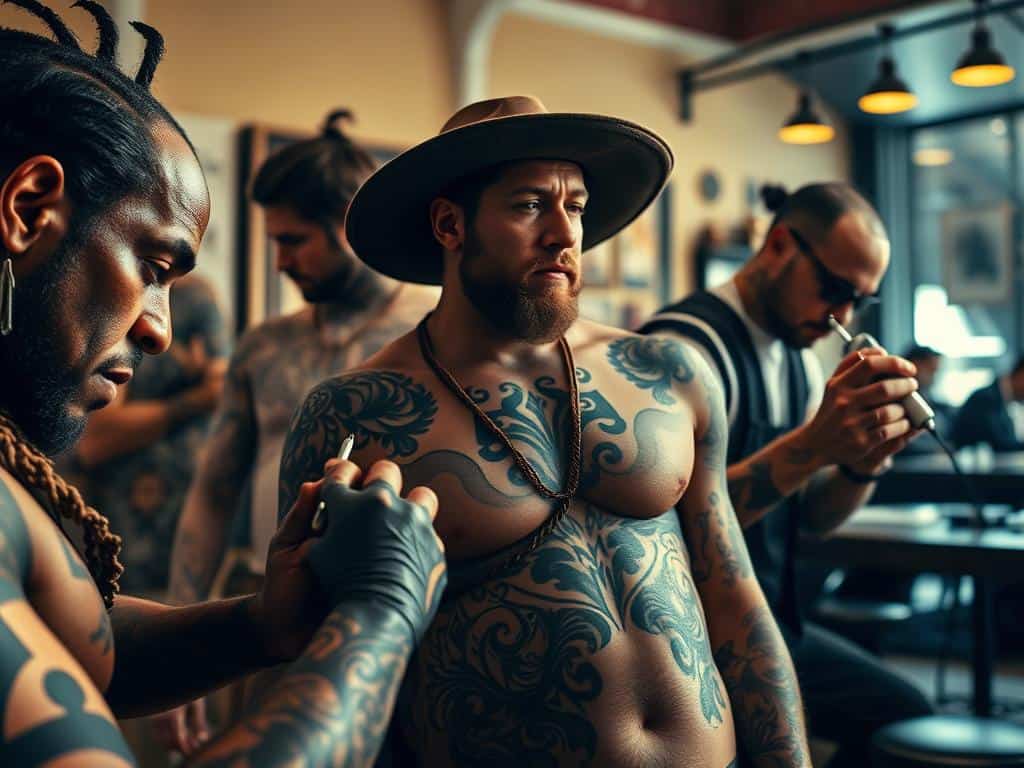
New technology has greatly changed tattoo art. The electric tattoo machine, invented in 1891, made tattoos more detailed and precise. Today, artists mix old and new styles, creating amazing art.
This mix shows how tattoos have evolved. It shows how personal expression and art can come together.
Conclusion
Tattoos have a long history filled with human expression and cultural importance. They started as rites of passage in ancient times. Now, they are seen as symbols of personal identity, showing big changes in how we view them.
Today, tattoos are more accepted than ever. In fact, 36% of employers don’t see tattoos as a problem when hiring. This shows tattoos are more than just body art; they tell our stories and show who we are.
Looking back, tattoos have moved from being seen as taboo to being celebrated. They now represent resilience and change in our communities. Tattoos are a way to share our experiences and connect with others.
