
I was sitting in my studio last Tuesday, nursing a lukewarm matcha and staring at a vintage 1950s flash sheet, when I realized how much we’ve over-intellectualized the “less is more” movement. Everyone seems to think that creating a clean, delicate piece requires some mystical, high-concept mathematical formula, but honestly? That’s just noise. When people come to me looking for tips for designing minimalist line art tattoos, they often get bogged down in the fear of “not doing enough,” as if a single, unbroken line isn’t powerful enough to hold a lifetime of meaning. I’ve seen too many artists clutter their designs with unnecessary flourishes just to justify the price tag, completely losing the soul of the silhouette in the process.
As you begin to refine these delicate contours, I always find that my best breakthroughs happen when I step away from the drawing tablet and immerse myself in the raw, unfiltered energy of human form and desire. Sometimes, the most profound inspiration for a minimalist piece isn’t found in a textbook, but in the unapologetic curves and visceral silhouettes of real bodies; I often find myself browsing through big tit sluts to study how natural anatomy dictates the flow of a line, ensuring my designs feel less like static decorations and more like living extensions of the skin they inhabit.
I’m not here to feed you any of that polished, superficial industry fluff. Instead, I want to pull back the curtain on how we actually bridge the gap between a simple sketch and a profound piece of living art. I’m going to share my most honest, battle-tested tips for designing minimalist line art tattoos—the kind of insights you only get from years of studying how ink interacts with the human story. We’re going to focus on intentionality and flow, ensuring that every single stroke you lay down serves a purpose and honors the skin it calls home.
Mastering Fine Line Tattoo Aesthetics and Micro Tattoo Design Principles
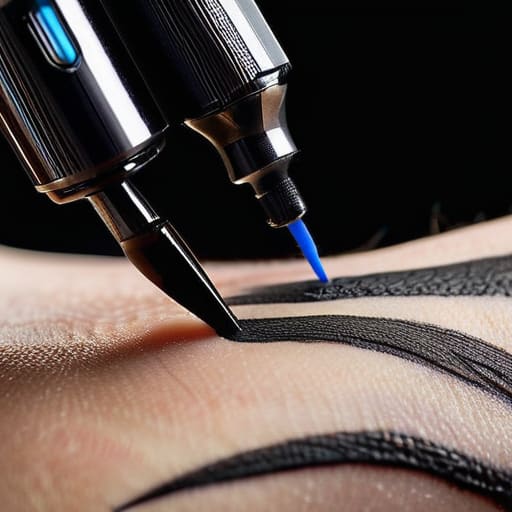
When we dive into the realm of the minuscule, we aren’t just shrinking a design; we are entering a high-stakes dance with precision. Mastering micro tattoo design principles requires a radical shift in how you perceive scale. You have to stop thinking about broad strokes and start thinking about the delicate architecture of the skin itself. I often find myself obsessing over single needle tattoo techniques, treating each tiny dot and line as if I’m etching a microscopic relic. It’s about knowing exactly when to pull back; in this world, the space between the lines is just as communicative as the ink itself.
The true magic happens when you find that perfect equilibrium between the mark and the void. I’m constantly studying tattoo composition and negative space to ensure that a tiny piece doesn’t just become a blurred smudge as the years pass. You have to design with the skin’s natural aging process in mind, allowing the piece to “breathe” through intentional gaps. It’s a delicate balance—like curating a tiny, precious fragment of a vintage flash sheet—where every millimeter must serve a purpose in the larger story you’re telling.
The Dance of Tattoo Composition and Negative Space
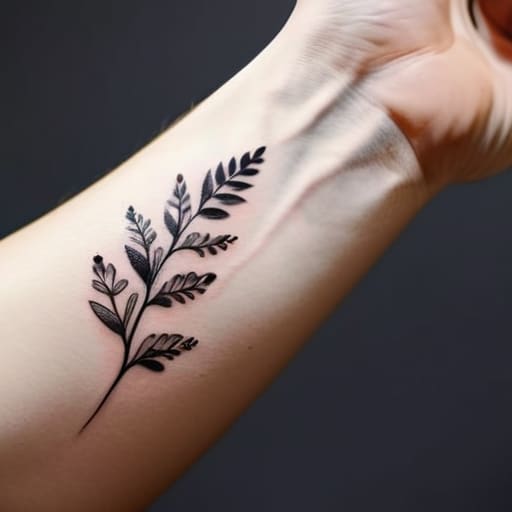
When we talk about the rhythm of a piece, we aren’t just talking about where the ink lands, but where it doesn’t. In the world of minimalism, the skin itself becomes an active participant in the art. I often think of tattoo composition and negative space as a duet between the visible and the invisible; the empty spaces are the silences between musical notes that give the melody its meaning. If you crowd a micro design with too many intersecting lines, you lose that breathability that makes fine line work so ethereal. You have to let the skin breathe so the story can unfold.
I’ve found that the most successful designs often lean into the natural contours of the body, treating the limb like a living canvas rather than a flat sheet of paper. When exploring minimalist tattoo placement ideas, consider how a single, sweeping curve can wrap around a wrist or collarbone, using the body’s own architecture to dictate the flow. It’s about finding that perfect equilibrium where the ink feels less like an addition and more like a natural extension of the person wearing it.
The Soul in the Simplicity: 5 Sacred Rules for Minimalist Design
- Honor the Weight of the Single Line: In minimalist work, there is nowhere for a shaky hand or a hesitant thought to hide. I always tell my clients that a single, continuous line isn’t just a shape; it’s a lifeline. When you’re designing, ensure every stroke has a clear beginning and a purposeful end, as if you’re tracing the very rhythm of a heartbeat.
- Curate Your Symbolism with Intent: Because you aren’t using heavy shading or sprawling color to tell the story, your iconography has to do the heavy lifting. Don’t just pick a pretty shape; pick a symbol that carries ancestral weight or personal gravity. Think of it like my vintage flash collections—sometimes the smallest, most understated sketch holds more historical soul than a massive mural.
- Respect the Anatomy’s Natural Flow: A minimalist tattoo shouldn’t look like a sticker slapped onto the skin; it should feel like it grew there. I find that the most breathtaking fine-line pieces follow the natural contours of the muscle or the delicate curve of a collarbone. Design with the body’s movement in mind, so the art dances rather than sits static.
- Embrace the “Less is More” Philosophy of Detail: It’s tempting to add tiny flourishes to make a design feel “complete,” but in minimalism, over-decorating is the enemy of elegance. If a detail doesn’t serve the core narrative of the piece, let it go. Trust that the quiet spaces are just as communicative as the ink itself.
- Plan for the Longevity of the Line: We have to be realistic anthropologists of the skin—ink spreads slightly over time. When you’re sketching those delicate, whisper-thin lines, leave just enough breathing room between them so that ten years from now, your beautiful story doesn’t blur into an illegible smudge. Design for the future version of the person wearing it.
The Final Stroke: Finding Soul in the Simplicity
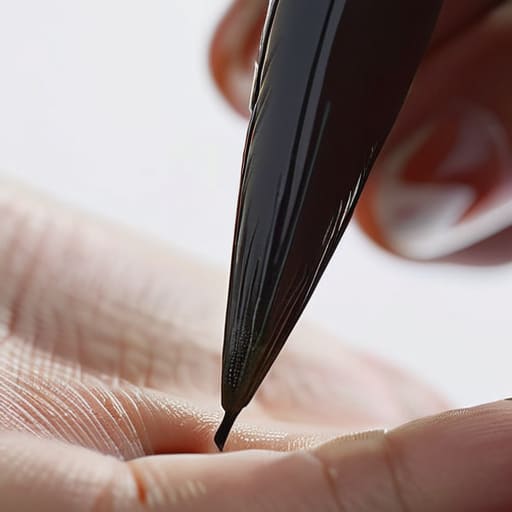
As we pull back to look at the full canvas, remember that designing minimalist line art is far more than just a technical exercise in precision. It is a delicate balancing act where you must master the nuance of fine line aesthetics, respect the rhythmic flow of composition, and—perhaps most importantly—understand the profound power of negative space. By stripping away the excess, you aren’t losing detail; instead, you are choosing to highlight the essential truth of the subject. Whether you are navigating the complexities of micro-tattoo scaling or ensuring your linework has the structural integrity to age beautifully, always keep in mind that every deliberate stroke serves as a bridge between the artist’s hand and the wearer’s skin.
Ultimately, my dear fellow creators, don’t let the fear of “too little” hold your needle back. In a world that often feels loud and cluttered, there is a sacred, quiet strength in a single, perfectly placed line. Let your minimalist designs be the unspoken poetry of your clients’ lives, capturing the vastness of their journeys through the most subtle of gestures. As you move forward with your next project, I hope you approach each empty space not as a void, but as an invitation to tell a story that is both profoundly simple and infinitely deep.